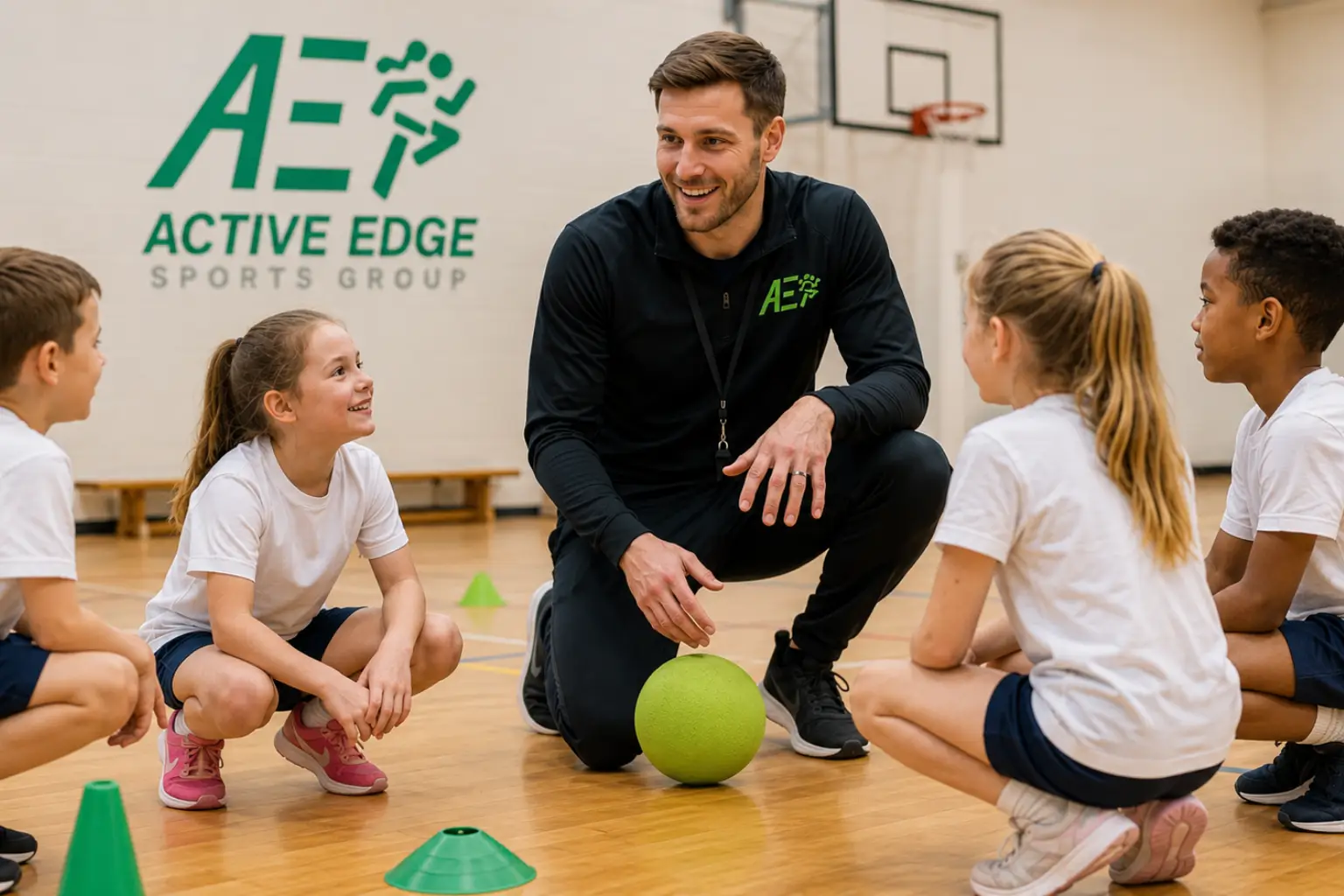
Building children’s wellbeing through sport can have benefits that extend far beyond physical fitness. Positive sporting experiences can help young people develop confidence, friendships, resilience and a sense of achievement while encouraging them to enjoy an active lifestyle.
The key is creating an environment where children feel supported, included and encouraged rather than judged purely on sporting performance.
At Active Edge Sports Group, we believe physical activity can play an important role in helping young people develop both physically and personally.
Building Confidence Through Small Achievements
Confidence is rarely created through one major accomplishment.
For children, it is often developed through a series of smaller successes: learning a new movement, completing a challenge, contributing to a team or simply taking part in something they previously felt nervous about.
Well-structured activities give children achievable goals while still providing enough challenge to encourage progression.
A child does not need to be the fastest runner or strongest footballer to experience success.
Recognising effort, improvement and participation helps children understand that progress matters just as much as comparison with others.
Supporting Children’s Wellbeing Through Sport
Physical activity can give children an important opportunity to move, interact with others and enjoy time away from more formal learning environments.
Good sports provision should consider how children feel while taking part, not simply how well they perform.
Activities that place excessive pressure on young people can discourage participation. A supportive approach instead encourages children to try, make mistakes and gradually develop confidence.
This is one reason why inclusive coaching and age-appropriate activities are so important.
Creating Opportunities for Social Development
Sport naturally creates situations where young people need to interact with others.
Team activities encourage communication, cooperation and decision-making. Even individual challenges can take place within a supportive group where children encourage one another and share experiences.
These interactions can help pupils develop social confidence and learn how to work alongside different personalities.
For some children, a sports session may also provide an easier environment for developing friendships than a traditional classroom setting.
Shared activities create immediate common ground and give children something positive to experience together.
Learning to Deal With Challenges
Sport inevitably includes moments when things do not go according to plan.
A pass may be misplaced, a team may lose a game or a new skill may take several attempts to master.
Handled appropriately, these experiences can be extremely valuable.
Children can learn that mistakes are part of improvement and that disappointment does not mean they should stop trying.
Coaches and teachers can reinforce this by focusing on effort, learning and response rather than simply results.
Over time, these experiences can help children become more comfortable facing challenges both within and outside sport.
Making Sport Inclusive for Every Child
Children naturally have different abilities, interests and levels of confidence.
Some will immediately enjoy competitive activities, while others may require additional encouragement or adaptations before feeling comfortable taking part.
Inclusive provision aims to give every child a meaningful opportunity to participate.
Active Edge also works with schools to support pupils with SEND, helping schools create physical activities that can be adapted around individual abilities and requirements.
Supporting children’s wellbeing through sport means recognising these differences rather than expecting every young person to participate in exactly the same way.
Giving Children a Sense of Belonging
One of the most valuable aspects of organised sport is the opportunity to feel part of a group.
Whether children are representing their school, attending a community programme, joining an after-school club or participating in a football session, belonging to a group can create consistency and connection.
The strongest environments make children feel welcome regardless of their existing ability.
This can be particularly important for beginners who may worry that everyone else already knows what they are doing.
Clear explanations, encouragement and appropriately structured activities can make participation much less intimidating.
Taking Positive Experiences Beyond the Session
The benefits of an enjoyable sports session should not disappear when the activity finishes.
Children who become more confident participating in physical activity may become more willing to try new sports, join clubs or remain active outside school.
They may also carry lessons about teamwork, resilience, communication and perseverance into other areas of their lives.
That is why successful youth sport should never be measured solely by sporting ability.
Developing children’s wellbeing through sport is about creating positive experiences that help young people become more confident, active and willing to challenge themselves.
Active Edge Sports Group provides school sport, wellbeing, community and physical activity programmes designed to give young people opportunities to participate, develop and enjoy being active.
Schools interested in providing more opportunities for their pupils can explore our Schools programmes or contact the Active Edge Sports Group team to discuss their requirements.